
Antimony & Stibnite Context in Pakistan
Antimony occurrences in Pakistan are documented primarily as stibnite within quartz-sulfide veins along tectonic shear zones. Commercial appraisal must strictly distinguish between geological exploration records and active production capacity.
Mandatory Claim Boundary & Sourcing Notice: This page describes mineral/material evidence and buyer requirements. It does not represent current Enigma Earth inventory. Source, ownership, grade, quantity and availability must be verified for the specific enquiry.
Mineralogy & Geological Occurrence
Antimony mineralization in Pakistan is predominantly represented by the sulfide mineral stibnite (Sb2S3). Occurrences are documented in remote hydrothermal vein systems in the Hindu Kush of northern Khyber Pakhtunkhwa and within fault-controlled zones of Balochistan.
The primary documented localities are the Krang and Partsan vein belts in Chitral District (KP), where quartz-stibnite veins crosscut Paleozoic slates, quartzites, and phyllites. In Balochistan, stibnite occurrences are noted in Qila Abdullah (Surkhab Valley) and surrounding structural zones.
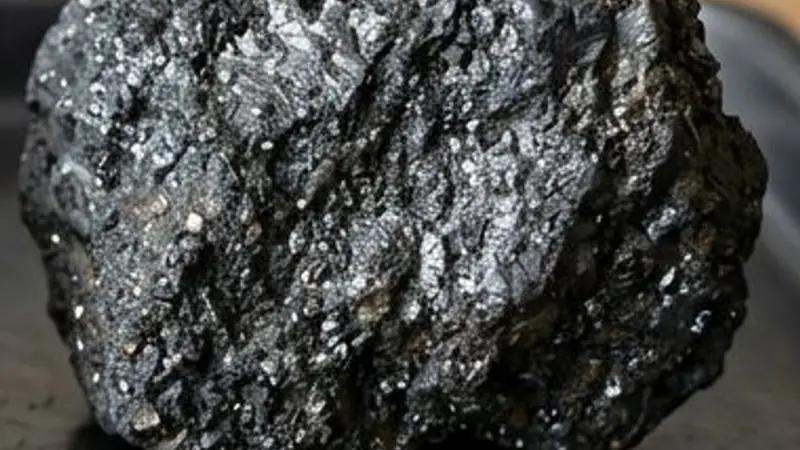
Primary mineralization is stibnite (Sb2S3), characterized by lead-grey submetallic luster and fibrous to bladed crystal habits. Common gangue minerals include quartz, calcite, and pyrite, with secondary antimony oxides (valentinite, cervantite) forming near weathered surface outcrops.
Pakistan Evidence & Regional Context
Antimony is classified under Exploration / Occurrence Context (O). Geological records document artisanal pit extraction and mineralized outcrops; no widespread or continuous industrial-scale flotation processing operates at present.
Chitral (Krang, Partsan, Lutkho Valley)
Hydrothermal quartz-stibnite veins in metamorphic terranes. Historically extracted by artisanal prospectors; requires systematic diamond drilling and metallurgical flowsheeting.
Qila Abdullah (Surkhab Valley, Shekran)
Fault-hosted stibnite mineralization in sedimentary-tectonic mélange sequences; exploration context requiring modern structural delineation.
Commercial Forms & Processing Stages
Commercial requirements must strictly differentiate between raw extraction, sorted grades, and processed products.
Hand-Sorted Stibnite Lump Ore
High-grade crude antimony ore manually separated at the pithead to reject barren quartz and host slate.
Flotation Antimony Concentrate
Upgraded mineral concentrate produced through selective flotation of pulverized low-grade stibnite ore. Requires dedicated beneficiation infrastructure.
Antimony Crude (Needle Antimony)
Intermediate metallurgical product (Sb2S3 ~70% Sb) obtained through liquation roasting of high-grade stibnite. Advanced processing form not widely available on spot markets.
Buyer Specification Requirements
Prospective buyers and project owners should specify the parameters below. Values represent typical industrial targets and do not imply universal Pakistani deposit compliance.
Assay & Elemental Composition
5 ParametersPhysical & Moisture Parameters
2 ParametersCommercial & Lot Parameters
3 ParametersTesting & Verification Requirements
Testing and quality verification must be conducted by an appropriate independent laboratory. Commercial transactions require representative sampling, assay, chemical analysis or gemological appraisal, and third-party inspection. Enigma Earth does not maintain a private testing monopoly.
Incremental grab or spear sampling of assembled small lots with crushing and reduction in accordance with ASTM E86 preparation protocols. Sealed composite splits for umpire analysis.
- ASTM E86 (Standard Test Methods for Chemical Analysis of Antimony)
- ISO 9599 (Moisture determination in analytical samples)
- Inductively Coupled Plasma (ICP-OES) for multi-element trace penalty screening (As, Bi, Pb, Hg, Se)
Because stibnite occurrences in Pakistan are discontinuous, prospective buyers must commission independent laboratory analysis of actual sampled material prior to contractual commitment.
Impurity Tolerances & Critical Penalty Factors
Commercial specifications require explicit thresholds for penalty elements, structural soundness, color uniformity, and treatment parameters.
Arsenic (As)
Quality ParameterOperational Impact: Arsenic is mineralogically associated with stibnite (arsenopyrite, realgar) and is a severe contaminant in antimony trioxide synthesis
Lead (Pb) & Copper (Cu)
Quality ParameterOperational Impact: Contaminates antimony metal used in battery alloys and creates color degradation in chemical pigment grades
Selenium (Se) & Mercury (Hg)
Quality ParameterOperational Impact: Stringent international environmental restrictions on toxic volatile heavy metals
Silica Gangue (Quartz)
Quality ParameterOperational Impact: Increases energy requirements and slag losses during direct liquation or smelting
Sourcing, Provenance & Preparation Logistics
Due diligence guidelines for legal chain of custody, packaging standards, and maritime export protocols.
All mineral transactions must carry verified provincial Directorate General of Mines & Minerals (DGMM) exploration lease or prospecting permit clearance.
Northern high-altitude deposits in Chitral face seasonal access constraints (snow cover from November to May). Regulatory status requires confirmation of valid provincial title.
- Heavy-duty 50 kg woven polypropylene bags with inner polyethylene barrier liners
- Reinforced steel drums with locking lever clamps for high-grade parcels
Road haulage from northern KP or western Balochistan depots to Karachi Port for containerized maritime export.
Relevant Regional Context
Technical Support for Mineral Evaluation & Supply
Enigma Earth provides technical due diligence, commercial facilitation, and exploration services to de-risk mineral procurement in Pakistan.
Mineral Exploration & Resource Appraisal
Geological mapping, geochemical trenching, core drilling, and resource evaluation for critical antimony prospects.
Mineral Trading & Export Facilitation
Independent off-take structuring, lot identification, export clearance, and port logistics management.
Mining Consultancy & Concession Diligence
Provincial lease title verification, technical audits, and regulatory compliance advisory.
Commercial Pathways for Antimony (Stibnite)
Whether you are an international buyer seeking verified mineral supply or a licensed Pakistani mine operator looking to qualify off-take.
Mineral Buyers Registry
Review documented off-take requirements from industrial and international buyers.
Sell Your Mineral
Submit verifiable Antimony (Stibnite) parcels, stockpiles, or concessions for third-party qualification.
Mining Tenders & Leases
Monitor provincial DGMM lease auctions, block bidding, and concession notices.
Pakistan Mining Regions
Explore provincial mineral directorates, logistics corridors, and geological belts across Pakistan.
What to Send: Technical Requirement Checklist
To evaluate feasibility and structure compliant off-take, please include the following technical details in your enquiry.
Frequently Asked Questions: Antimony (Stibnite)
Key questions regarding Pakistani mineral availability, testing protocols, and trade qualification.
Antimony in Pakistan is primarily an exploration and artisanal occurrence commodity. While historical vein extraction is documented in Chitral and Qila Abdullah, continuous large-scale industrial flotation production is not currently active.
Structure a Compliant Antimony (Stibnite) Requirement
Submit technical specifications, target grades, and consignment parameters for structured verification.