
Kaolin & China Clay Context in Pakistan
Kaolin resources in Pakistan occur as residual weathering crusts on granitic basement rocks and hydrothermal alteration zones. Industrial suitability depends on alumina content, fired whiteness, freedom from iron and titania chromophores, and particle size distribution.
Mandatory Claim Boundary & Sourcing Notice: This page describes mineral/material evidence and buyer requirements. It does not represent current Enigma Earth inventory. Source, ownership, grade, quantity and availability must be verified for the specific enquiry.
Mineralogy & Geological Occurrence
Pakistan possesses commercial kaolin (china clay) deposits formed through both supergene weathering of feldspar-rich granites and hydrothermal alteration of aluminosilicate host rocks. Material is extracted for domestic tableware ceramics, sanitaryware, tile bodies, paper fillers, and specialty refractory applications.
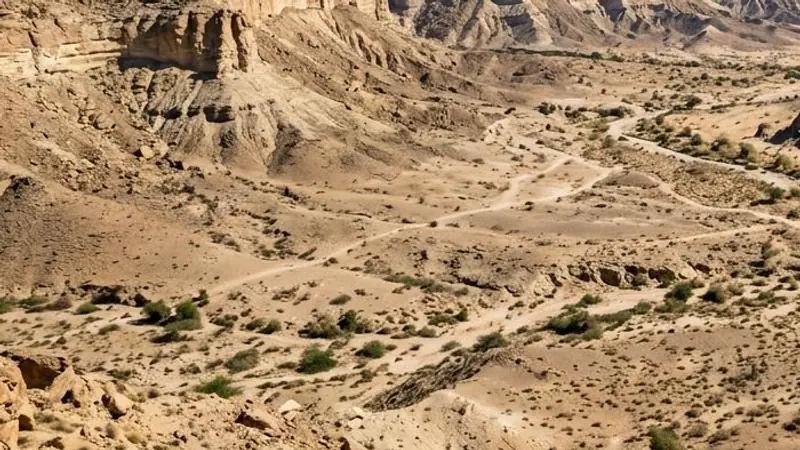
The premier kaolin province is the Nagar Parkar area in Tharparkar District, Sindh, where intensive humid-tropical chemical weathering of Proterozoic granites created kaolinite-rich profiles. A distinct hydrothermal deposit occurs at Shah Dheri in Swat District (Khyber Pakhtunkhwa), formed by the alteration of feldspathic anorthosites.
The primary mineral is kaolinite (Al2Si2O5(OH)4), a 1:1 dioctahedral layer aluminosilicate forming micro-hexagonal platelets. Deleterious gangue minerals include quartz grit, orthoclase feldspar, mica, and chromophore oxides such as hematite (Fe2O3) and anatase/rutile (TiO2).
Pakistan Evidence & Regional Context
Kaolin extraction in Pakistan is documented through positive official reporting in Sindh and Khyber Pakhtunkhwa. Beneficiation plants in Sindh perform wet washing, hydrocycloning, and magnetic separation to remove coarse quartz sand and reduce iron staining.
Nagar Parkar (Parodh, Dhedhvero, Ramji ka Vandio)
Extensive residual deposits developed over basement granites. Raw clay contains 30% - 50% quartz sand requiring wet beneficiation; established source for ceramics and tile manufacturing.
Swat District (Shah Dheri)
Hydrothermally altered anorthositic kaolin deposit with low iron; historically utilized for domestic high-voltage electrical porcelain and sanitaryware.
Commercial Forms & Processing Stages
Commercial requirements must strictly differentiate between raw extraction, sorted grades, and processed products.
Water-Washed Ceramic Grade Kaolin
Beneficiated china clay slurry dewatered into filter cakes or spray-dried noodles, characterized by high alumina (Al2O3 >= 35%), low iron, and excellent plasticity.
Paper & Paint Filler Grade Kaolin
Micronized, high-brightness kaolin powder (ISO brightness >= 84% - 88%) processed with high-gradient magnetic separation to eliminate titania and iron discoloration.
Crude Run-of-Mine China Clay Lump
Unwashed raw kaolinitic material extracted directly from the pitface, supplied to local tile and brick factories for low-cost refractory body blending.
Calcined Kaolin (Metakaolin)
Thermally dehydroxylated kaolin (calcined at 650°C - 850°C) used as a reactive pozzolan in high-strength concrete and as an extender in performance coatings.
Buyer Specification Requirements
Prospective buyers and project owners should specify the parameters below. Values represent typical industrial targets and do not imply universal Pakistani deposit compliance.
Assay & Elemental Composition
5 ParametersPhysical & Optical Parameters
4 ParametersCommercial & Delivery Parameters
3 ParametersTesting & Verification Requirements
Testing and quality verification must be conducted by an appropriate independent laboratory. Commercial transactions require representative sampling, assay, chemical analysis or gemological appraisal, and third-party inspection. Enigma Earth does not maintain a private testing monopoly.
Automated stream increment sampling during packaging or spear sampling of bagged lots in compliance with ISO 3262-10 for kaolin pigments. Quartering for moisture, optical, and chemical analysis.
- ISO 3262-10 (Extenders for paints — Part 10: Natural kaolin)
- ASTM C326 (Test Method for Drying and Firing Shrinkages of Ceramic Whiteware Clays)
- ASTM C323 (Test Methods for Chemical Analysis of Ceramic Clays)
Ceramic buyers must request both raw chemical assays and actual pilot firing tests at target kiln temperatures (e.g. 1200°C - 1280°C) to assess fired whiteness (L*, a*, b*) and total shrinkage.
Impurity Tolerances & Critical Penalty Factors
Commercial specifications require explicit thresholds for penalty elements, structural soundness, color uniformity, and treatment parameters.
Iron Oxide (Fe2O3) & Titania (TiO2) Chromophores
Quality ParameterOperational Impact: During ceramic firing in oxidizing atmospheres, iron forms ferric silicate phases that impart yellow, buff, or brown discoloration, ruining white porcelain translucency
Quartz Grit Residue (> 45 µm / 325 mesh)
Quality ParameterOperational Impact: Abrasive quartz particles cause scratch defects on glossy glazes, wear down casting dies, and cause rapid wear of papermaking wire screens
Soluble Salts (Sulfates & Chlorides)
Quality ParameterOperational Impact: Soluble ions cause deflocculation instability in ceramic slip casting and cause efflorescence on fired terracotta bodies
Carbonaceous Organic Matter
Quality ParameterOperational Impact: Organic carbon burns out during firing, causing black coring, pinholes, and gas blistering in fast-fire ceramic tile kilns
Sourcing, Provenance & Preparation Logistics
Due diligence guidelines for legal chain of custody, packaging standards, and maritime export protocols.
All consignments must be backed by official provincial transport permits from the Sindh or KP mining directorates, verified lease credentials, and washery batch quality certificates.
Quarries in Nagar Parkar operate under provincial mining concessions. Environmental safeguards for local groundwater and topsoil preservation are legally enforced.
- 25 kg or 50 kg multi-wall kraft paper bags with inner polyethylene moisture liner on heat-treated wooden pallets
- 1.0 MT heavy-duty UV-stabilized woven polypropylene bulk jumbo bags with discharge spouts
Road haulage from Nagar Parkar or Swat to domestic ceramic clusters (Gujranwala, Gujrat, Rawalpindi) or to Karachi Port for marine export.
Relevant Regional Context
Related Minerals & Materials
Technical Support for Industrial Mineral Requirements
Enigma Earth provides technical due diligence, commercial facilitation, and exploration services to de-risk mineral procurement in Pakistan.
Mineral Trading & Export Facilitation
Independent off-take structuring, lot identification, export clearance, and port logistics management.
Mineral Exploration & Resource Appraisal
Geological mapping, drilling, and quality assessment for industrial clay and kaolin assets.
Mining Consultancy & Concession Diligence
Provincial lease title verification, technical audits, and environmental compliance advisory.
Commercial Pathways for Kaolin (China Clay)
Whether you are an international buyer seeking verified mineral supply or a licensed Pakistani mine operator looking to qualify off-take.
Mineral Buyers Registry
Review documented off-take requirements from industrial and international buyers.
Sell Your Mineral
Submit verifiable Kaolin (China Clay) parcels, stockpiles, or concessions for third-party qualification.
Mining Tenders & Leases
Monitor provincial DGMM lease auctions, block bidding, and concession notices.
Pakistan Mining Regions
Explore provincial mineral directorates, logistics corridors, and geological belts across Pakistan.
What to Send: Technical Requirement Checklist
To evaluate feasibility and structure compliant off-take, please include the following technical details in your enquiry.
Frequently Asked Questions: Kaolin (China Clay)
Key questions regarding Pakistani mineral availability, testing protocols, and trade qualification.
Raw in-situ kaolin in Nagar Parkar contains 30% to 50% coarse quartz sand and minor feldspar grit. Wet washing, hydrocyclone classification, and sedimentation are required to remove this abrasive quartz and yield a fine, smooth clay fraction (80% < 2 µm) suitable for ceramics and coatings.
Structure a Compliant Kaolin (China Clay) Requirement
Submit technical specifications, optical requirements, and consignment volumes for structured verification.