
Pakistan Ruby Context, Origin & Provenance
Ruby occurrences in Pakistan and Azad Jammu & Kashmir are hosted in high-grade metamorphic marble formations. Sourcing and gemological evaluation must strictly address geographical origin, natural treatment status, and independent laboratory verification. A ruby being traded in Pakistan does not by itself establish AJK or Neelum origin.
Mandatory Claim Boundary & Sourcing Notice: This page describes mineral/material evidence and buyer requirements. It does not represent current Enigma Earth inventory. Source, ownership, grade, quantity and availability must be verified for the specific enquiry.
Mineralogy & Geological Occurrence
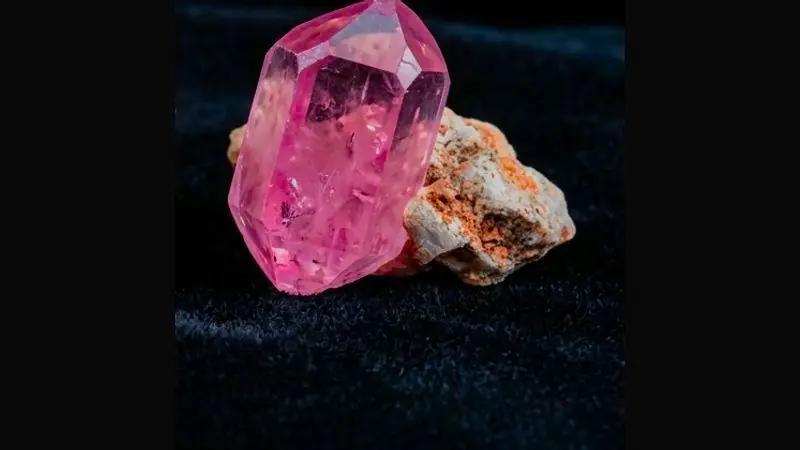
Rubies associated with the northern Pakistan and Azad Jammu & Kashmir regions represent rare metamorphic marble-hosted corundum occurrences formed during Himalayan regional metamorphism. Crystals exhibit intense pinkish-red to vivid pigeon-blood red hues with characteristic chromium fluorescence under long-wave ultraviolet light.
The primary documented locality is the Nangimali and Chitta Katha marble belt within the high-altitude Neelum Valley of Azad Jammu & Kashmir, where aluminous limestones devoid of quartz underwent amphibolite-to-granulite facies metamorphism. A secondary regional occurrence is documented in the metamorphic marbles of the Hunza Valley in Gilgit-Baltistan.
Ruby is the red gemological variety of corundum (Al2O3), where trace trivalent chromium (Cr3+) substitutes for aluminum in the crystal lattice. Pakistani rubies are characterized by high chromium and very low iron, resulting in strong red fluorescence without iron quenching. Common inclusions include calcite, rutile silk, margarite, and phlogopite mica.
Pakistan Evidence & Regional Context
Ruby is classified under Gemstone / Specimen Evidence (S). Historical extraction was conducted at Nangimali in the Neelum Valley, but operations are currently non-industrial with no active corporate concession yielding continuous commercial supply.
Neelum Valley (Nangimali, Chitta Katha, Khora marble belt)
High-altitude marble-hosted corundum deposits at elevations above 3,800 meters. Historical artisanal and exploratory extraction; currently inactive on an industrial scale. Zero continuous stock claims are supported.
Hunza Valley (Aliabad, Ganesh, Hasanabad marble beds)
Metamorphic marble terranes hosting pink sapphire and purple-red ruby crystals; artisanal seasonal pocket recovery.
Commercial & Specimen Forms
Commercial requirements must strictly differentiate between raw extraction, sorted grades, and processed products.
Natural Rough Crystals
Uncut, natural single crystals exhibiting barrel-shaped hexagonal prisms, tabular basal pinacoids, or rhombohedral terminations.
Faceted & Polished Gemstones
Faceted gems cut from transparent rough, displaying intense red hue, vitreous luster, and high optical brilliance.
Museum & Collector Matrix Specimens
Natural aesthetic display pieces showing vibrant red corundum crystals embedded in contrasting white crystalline marble matrix.
Cabochon-Grade & Carving Rough
Semi-translucent to opaque material suitable for dome-shaped cabochons, beads, or ornamental carvings.
Buyer Specification Requirements
Prospective buyers and project owners should specify the parameters below. Values represent typical industrial targets and do not imply universal Pakistani deposit compliance.
Gemological & Quality Parameters
4 ParametersProvenance & Laboratory Verification
3 ParametersCommercial & Consignment Parameters
2 ParametersTesting & Verification Requirements
Testing and quality verification must be conducted by an appropriate independent laboratory. Commercial transactions require representative sampling, assay, chemical analysis or gemological appraisal, and third-party inspection. Enigma Earth does not maintain a private testing monopoly.
Individual piece-by-piece inspection and gemological examination under binocular darkfield microscopy, immersion cell, and long-wave / short-wave ultraviolet illumination.
- Appropriate independent gemological laboratory origin and treatment determination protocol
- Optical refractometry (Refractive Index 1.762 - 1.770, Birefringence 0.008)
- FTIR Spectroscopy (testing for resin, polymer, or glass fracture filling)
- Laser Ablation ICP-MS (trace element profile: Cr, Fe, V, Ga, Ti) for geographical provenance determination
Where origin, treatment, or identity is commercially important, buyers should request an independent report from an appropriate independent gemological laboratory. Enigma Earth does not maintain exclusive partnerships with any single laboratory.
Treatment, Condition & Value-Critical Factors
Commercial specifications require explicit thresholds for penalty elements, structural soundness, color uniformity, and treatment parameters.
Undisclosed Thermal Treatment (Heating)
Quality ParameterOperational Impact: Alters natural inclusions, dissolves rutile silk, and artificially improves color; heated rubies command substantial commercial discounts compared to certified unheated stones
Lead-Glass, Resin, or Flux Fracture Filling
Quality ParameterOperational Impact: Composite materials filled with high-RI lead glass or epoxy resins are treated as manufactured composites with minimal intrinsic value and severe chemical fragility
Heavy Silk Clouding and Parting Planes
Quality ParameterOperational Impact: Dense internal rutile needles and polysynthetic twinning parting planes reduce transparency, light return, and structural integrity during facet cutting
Repaired or Assembled Matrix Specimens
Quality ParameterOperational Impact: Mineral specimens with loose crystals artificially glued or epoxied onto foreign marble rock matrix deceive collectors
Sourcing, Provenance & Preparation Logistics
Due diligence guidelines for legal chain of custody, packaging standards, and maritime export protocols.
A ruby being traded in Pakistan does not by itself establish AJK or Neelum origin. Due to regional trading hubs in Peshawar and Namak Mandi, stones from Afghanistan, Tajikistan, or East Africa are frequently marketed without provenance. Local origin must be corroborated by traceable documentation and trace element analysis.
The Neelum Valley deposits operate under the jurisdiction of the Azad Kashmir Mineral & Industrial Development Corporation (AKMIDC). Private commercial mining concessions are currently dormant, with no active corporate output.
- Sealed tamper-evident gemological parcel papers (diamond papers) inside security pouches
- Padded foam-lined display vitrines and custom acrylic specimen bases for matrix mineral pieces
Secure armored courier transport or hand-carried consignment under specialized international valuable cargo insurance (e.g. Brink's, Malca-Amit, Ferrari Group).
Relevant Regional Context
Related Minerals & Materials
Gemstone Verification & Sourcing Support
Enigma Earth provides technical due diligence, commercial facilitation, and exploration services to de-risk mineral procurement in Pakistan.
Mineral Trading & Export Facilitation
Secure chain-of-custody documentation, export appraisal, and international logistics facilitation.
Mineral Exploration & Resource Appraisal
Geological structural mapping, marble petrology, and resource potential appraisal for gemstone belts.
Mining Consultancy & Concession Diligence
Concession title diligence, regulatory advisory, and official auction verification in AJK.
Commercial Pathways for Ruby (Corundum)
Whether you are an international buyer seeking verified mineral supply or a licensed Pakistani mine operator looking to qualify off-take.
Mineral Buyers Registry
Review documented off-take requirements from industrial and international buyers.
Sell Your Mineral
Submit verifiable Ruby (Corundum) parcels, stockpiles, or concessions for third-party qualification.
Mining Tenders & Leases
Monitor provincial DGMM lease auctions, block bidding, and concession notices.
Pakistan Mining Regions
Explore provincial mineral directorates, logistics corridors, and geological belts across Pakistan.
What to Send: Gemstone Requirement Checklist
To evaluate feasibility and structure compliant off-take, please include the following technical details in your enquiry.
Frequently Asked Questions: Ruby (Corundum)
Key questions regarding Pakistani mineral availability, testing protocols, and trade qualification.
Geographical origin can only be supported through comprehensive examination by an appropriate independent gemological laboratory using trace element fingerprinting (such as LA-ICP-MS showing characteristic low-Fe, high-Cr, and specific Ga/V ratios) and microscopic inclusion identification consistent with Himalayan marble geology.
Structure a Compliant Ruby (Corundum) Requirement
Submit technical specifications, carat requirements, and gemological parameters for structured verification.